
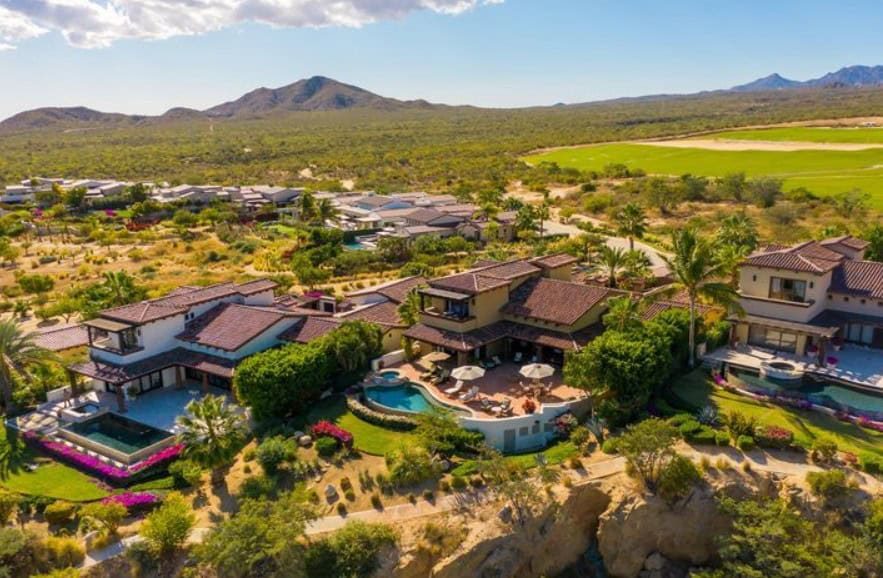
Selling a home in Cabo Real is handled the same way as any Mexican property sale: a notary public formalises the transfer, calculates the seller’s income tax on the gain and pays it to the tax authority before releasing the funds. The sellers who close fastest are the ones who gather their tax paperwork and no-debt letters before they accept an offer. This guide explains how the tax is worked out, what documents you need and how long a Cabo Real sale usually takes.
This is general information for owners, not tax or legal advice. Tax rules change; confirm the figures for your sale with your notary and a Mexican accountant.
Key facts: selling in Cabo Real
- Every sale closes before a Mexican notary public (notario público), who withholds the seller’s income tax (ISR) at closing.
- Non-resident sellers pay either 25% of the gross sale price, or 35% of the net gain if they appoint a legal representative in Mexico (Income Tax Law, art. 160).
- The gain is the sale price minus the inflation-adjusted cost of the land and construction, documented improvements and some closing costs.
- Mexican tax residents may be exempt on the sale of their own home up to 700,000 UDIs if they meet the conditions (art. 93).
- Cabo Real is in the coastal restricted zone, so most foreign-owned homes are held in a bank trust (fideicomiso) that has to be transferred or released.
- You will need up-to-date property tax (predial), water and HOA no-debt letters before closing.
How is capital gains tax worked out when you sell?
Mexico taxes the gain on a property sale as income (Impuesto Sobre la Renta, ISR). The notary works out the figure and withholds it from the price, so the tax is paid on the day of closing rather than in a later return. How much you pay depends mostly on whether you are a Mexican tax resident and on how well you can document your costs.
For a non-resident seller, the Income Tax Law (art. 160) gives two options: 25% of the gross sale price with no deductions, or 35% of the net gain if the seller appoints a legal representative who is resident in Mexico. On a home that has risen in value modestly, the net-gain route is usually far cheaper, which is why most non-resident sellers appoint a representative.
The net gain is the sale price minus the cost of acquisition, adjusted for inflation using Mexico’s consumer price index. The cost of the land and of the construction are treated separately: the construction cost is reduced by depreciation for each year you have owned it, while the land cost is not. Improvements count only if you can show proper Mexican invoices (CFDI). The notary also deducts certain costs of the sale, such as the agent’s commission if it was invoiced correctly. Your purchase deed (escritura) and the appraisal (avalúo) commissioned for the sale are the starting point.
Can you sell your Cabo Real home tax-free?
Possibly, if you are a Mexican tax resident and the property is your home. Article 93 of the Income Tax Law exempts the sale of a seller’s home (casa habitación) up to 700,000 UDIs, an inflation-linked unit published by the Bank of Mexico, provided the seller has not used the exemption in the previous three years and proves to the notary that the property is where they live. Proof is usually your RFC tax ID and CURP, plus utility bills or a voter ID at the address. Part-time owners who are resident abroad generally do not qualify. The tax authority SAT publishes the current rules.
What documents do you need to sell?
- Title. Your deed, or for a bank trust the trust deed and any later amendments, plus the registration details at the Public Registry of Property.
- Property tax (predial). A certificate from the Los Cabos municipality that predial is paid to date.
- Water. A no-debt letter from the water utility for the property’s account.
- HOA. A no-debt letter (carta de no adeudo) from the Cabo Real homeowners’ association or the condo regime, showing fees and any special assessments are paid.
- Cost records. Your purchase deed, invoices (CFDI) for construction and improvements, and closing-cost receipts. These decide how much tax you pay.
- Identification. Passport, and your RFC if you have one. If you are applying for the home exemption, your CURP and proof of residence.
- Utility bills. Recent electricity (CFE) bills, which buyers and notaries use to confirm the account is current.
Our guide to the cost of owning a home in Los Cabos explains predial, HOA fees and utilities if you need to bring any of them up to date.
What happens to the fideicomiso when you sell?
Because Cabo Real lies within Mexico’s coastal restricted zone, foreign owners normally hold title through a bank trust. When you sell to another foreign buyer, the notary can either transfer your beneficiary rights in the existing trust or have the bank release the property into a new trust for the buyer. Either way the buyer needs a Foreign Ministry permit (SRE permit information), and the trustee bank charges its own fees and needs its own paperwork. Contact your trust bank early: its sign-off is often the slowest step. Buyers can read the other side of this process in our guide to buying in Los Cabos as a foreigner.
How long does a Cabo Real sale take?
Once a buyer signs a purchase agreement and deposits into escrow, a cash sale typically takes several weeks to a few months to close. The time goes on the appraisal, the no-debt letters, the buyer’s trust permit and the trustee bank’s approval. Sellers who start the paperwork before listing can shorten that noticeably.
Time on the market is the bigger variable. In Cabo Real it depends heavily on the product and the price: our neighbourhood guides show recent MLS sales taking anywhere from a few months to more than a year. See Bugambilias homes and lots, Casa del Mar condos and the Cabo Real market report for the sales data.
How do you price a Cabo Real home to sell?
Price to recorded sales, not to other asking prices. Cabo Real covers very different products, from golf-view condos to beachfront residences, so the useful comparables are recent closings in the same enclave or building, adjusted for size, view, condition and furnishings. Homes priced well above the last comparable sales tend to sit, and long time on market usually ends in a larger discount than a realistic price at the start would have needed. Our team can pull every MLS sale for your building or street; see selling in Cabo Real.
Frequently asked questions
How much tax do I pay when I sell my house in Cabo Real?
A non-resident seller pays either 25% of the gross price or 35% of the net gain, if they appoint a legal representative in Mexico. The net gain is the sale price minus the inflation-adjusted cost of the property and documented improvements. The notary calculates and withholds the tax at closing.
Who collects the capital gains tax?
The notary public handling the sale calculates the tax, withholds it from the sale proceeds and pays it to Mexico’s tax authority, SAT.
Do I need an RFC to sell?
It helps and is required for some routes, such as the home exemption. Ask your notary early whether your sale needs one, as getting an RFC takes time.
What is a carta de no adeudo?
A no-debt letter. Before closing you need one from the homeowners’ association showing fees are paid, and certificates showing property tax and water are paid to date.
Can I sell my Cabo Real home while I am outside Mexico?
Yes. Many sellers sign a power of attorney before a notary or a Mexican consulate so a representative can sign at closing. The power must meet Mexican requirements, so have it drafted with the notary who will close the sale.
Summary
Selling in Cabo Real goes smoothly when the paperwork is ready before the buyer is: cost records to reduce your tax, no-debt letters, and an early call to your trust bank. Price to recorded sales and decide early whether to appoint a Mexican representative for the net-gain tax route. To get a pricing review based on every MLS sale in your part of Cabo Real, contact our team at info@LuxuryLosCabos.com, on WhatsApp at +52 624 147 1728, or through our contact page.


